SAP Analytics Cloud for Connected Business Planning
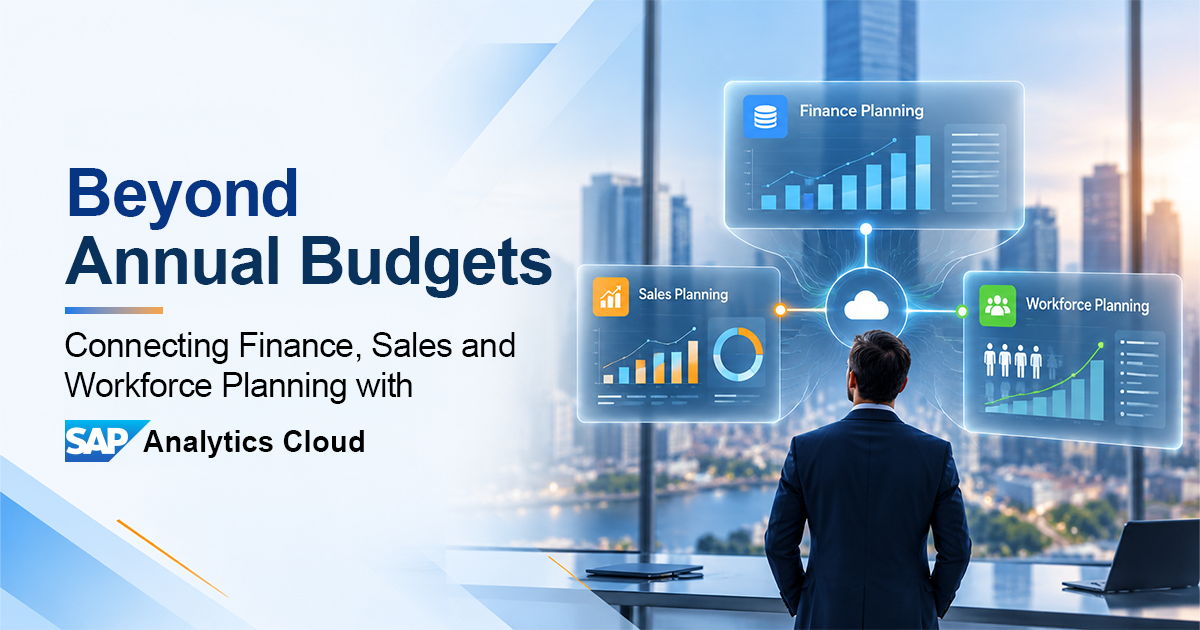
A budget prepared at the beginning of the year may not reflect what a business needs six months later.
Sales targets change, operating costs increase, and hiring requirements shift. Yet many organizations continue to manage these decisions through separate departmental plans.
The challenge becomes clearer when:
· Finance teams revise budgets without updated sales forecasts.
· Sales teams adjust revenue targets without considering financial limits.
· HR teams plan hiring without a clear view of changing business needs
This is why businesses need to move beyond fixed annual budgets towards connected planning through extended planning and analysis.
In this blog, you'll explore how SAP Analytics Cloud connects finance, sales and workforce planning to support more accurate forecasts, better coordination, and informed business decisions.
Where Traditional Annual Budgeting Falls Short
Annual budgets help businesses set financial goals and plan their spending for the year. However, these plans are often based assumptions made months in advance.
When sales, costs, or workforce requirements change, the original budget may no longer reflect actual business needs. This is where business planning becomes important.
Some common challenges with traditional annual budgeting include:
- Fixed Assumptions: Revenue, expenses and resource needs are estimated at the beginning of the year, leaving limited room for unexpected changes.
- Separate Departmental Plans: Finance, sales and HR teams may work with different targets and assumptions.
- Delayed Budget Updates: Revising financial plans across multiple spreadsheets and systems can take considerable time.
- Limited Visibility: Business leaders may find it difficult to see how changes in one department affect another.
- Planning Gaps: Changes in sales forecasts or hiring requirements may not be reflected in the overall budget.
For example, when sales targets increase, additional hiring may be required. If workforce costs are not updated alongside revenue plans, the budget can become unrealistic.
This is why businesses need a more connected approach, where finance, sales, and workforce plans are reviewed and updated together.
Why Finance, Sales and Workforce Planning Need to Work Together
Finance, sales, and workforce planning are closely connected. A decision made by one department can directly affect the budgets, targets, and resources of another. When these teams plan separately, businesses may struggle to align their financial goals with actual operational needs.
Each function plays an important role:
- Financial Planning: Sets revenue expectations, manages operating expenses, and determines budgets to support business goals.
- Sales Planning: Forecasts customer demand, sets sales targets, and estimates revenue that informs the financial plan.
- Workforce Planning: Identifies hiring requirements, employee costs, and staffing needs based on expected business growth.
Consider a simple example: A company plans to increase its sales targets by 20%.
Achieving this growth may require additional sales employees or operational staff. This increases workforce expenses, which must also be considered in the financial budget.
If these decisions are made separately, the company may face gaps between its revenue targets, available budgets, and staffing capacity.
Financial planning and forecasting help all three departments work with aligned expectations and make decisions that support the overall business plan.
How SAP Analytics Cloud Connects Finance, Sales and Workforce Planning
SAP Analytics Cloud (SAC) brings budgeting, forecasting, analytics, and planning into one platform. It helps finance, sales, and HR teams work with connected information, making it easier to align departmental plans with overall business goals.
Here's how SAP Analytics Cloud supports connected planning:
1. Bringing Business Data Together
· Connects relevant finance, sales, and workforce information
· Integrates with SAP S/4HANA, SAPSuccess Factors and supported third-party sources
· Reduces dependence on separate spreadsheets and disconnected records
2. Keeping Departmental Plans Aligned
· Helps teams work with consistent figures and targets
· Connect sales forecasts with financial expectations
· Aligns workforce requirements with planned business growth
3. Updating Forecasts When Plans Change
· Allow teams to revise revenue and expense forecasts.
· Reflects updated hiring and workforce cost assumptions
· Help understand how changes affect related plans
4. Supporting Better Collaboration
· Gives departments visibility into shared planning information
· Simplifies reviewing and coordinating changes
· Helps teams work towards common business goals
5. Making Planning More Flexible
· Supports regular budget reviews and adjustments
· Allows businesses to compare different planning scenarios
· Helps decision-makers assess possible financialoutcomes
By connecting these activities, SAP Analytics Cloud helps businesses move beyond separate departmental budgets towards a more coordinated planning process.
From Fixed Budgets to Continuous Forecasting and Scenario Planning
Business plans do not always go as expected. Sales may slow down; costs may increase or hiring needs may change. Instead of waiting for the next annual budget, businesses need a way to review and adjust their plans throughout the year.
SAP Analytics Cloud supports this shift through three key planning practices:
- Regular Forecasting: Teams can update revenue, expenses, and workforce plans using the latest business information, rather than relying only on estimates made at the start of the year.
- Scenario Planning: Businesses can compare different situations, such as higher customer demand, lower sales or rising employee costs, to prepare for possible changes.
- What-If Analysis: Decision-makers can assess how a change in sales targets or hiring plans may affect budgets and overall financial results.
For example, if sales fall below expectations, the finance team can revise revenue forecasts while HR reviews planned hiring and related costs.
With connected planning models, SAP Analytics Cloud helps businesses make these adjustments together, supporting timely decisions without waiting for the next annual budgeting cycle.
What Businesses Gain from Connected Planning
When finance, sales, and workforce planning are connected, businesses gain a clearer view of how decisions in one department affect another. This helps teams manage resources better and respond to changing business needs.
Some key benefits include:
- Better Budget Control: Understand how changes in sales targets, hiring plans, and workforce costs affect overall spending.
- More Accurate Forecasts: Use updated information from different departments to create realistic financial and operational plans.
- Faster Decision-Making: Spend less time collecting data and comparing separate plans, allowing teams to act sooner.
- Stronger Team Coordination: Keep finance, sales, and HR teams aligned with shared business goals and priorities.
Ultimately, connected planning helps organizations look beyond individual department budgets and make informed decisions based on the overall business picture.
Connecting Business Planning with Vestrics Solutions
As an SAP Gold Partner, Vestrics Solutions helps businesses connect financial, sales, and workforce planning through SAP solutions that align with their operational needs.
With its expertise in SAP Analytics Cloud, Vestrics supports organizations in:
· Bringing financial, sales, and workforce data together for better planning
· Improving budgeting, forecasting, and scenario planning across departments
· Integrating relevant business information from SAP S/4HANA and SAP SuccessFactors
· Aligning departmental plans with overall business goals
Through its SAP consulting and implementation expertise, Vestrics helps businesses move beyond separate budgets towards more connected and informed planning.
Ready to connect your business plans? Get in touch with Vestrics to explore how SAP Analytics Cloud can support your planning needs.
Conclusion: Better Planning Starts with Connected Decisions
Annual budgets remain important, but businesses need the flexibility to adjust their plans as conditions change. Connecting finance, sales, and workforce planning helps reduce gaps between departments and keeps business decisions aligned.
With SAP Analytics Cloud, organizations can bring planning, forecasting, and scenario analysis together to make more informed decisions.
The goal is not to replace annual budgets but to make planning more connected, flexible, and responsive to changing business needs.
Frequently Asked Questions (FAQs)
1. How is SAP Analytics Cloud used for business planning?
SAP Analytics Cloud helps businesses manage budgeting, forecasting, reporting, and planning on one platform. It allows finance, sales, and HR teams to work with connected information and make informed business decisions.
2. How does SAP Analytics Cloud improve financial planning and forecasting?
SAP Analytics Cloud helps finance teams update forecasts, track budgets, and compare different financial scenarios. This allows businesses to adjust their plans based on changing revenue, expenses, and operational needs.
3. What is connected to business planning, and why is it important?
Connected business planning brings financial, sales, and workforce plans together. It helps departments work with consistent information, improve coordination, and understand how decisions in one area affect the overall business.
4. How does SAP Analytics Cloud support workforce planning?
SAP Analytics Cloud helps organizations plan employee costs, hiring requirements, and workforce budgets. By connecting workforce informationwith financial and sales plans, businesses can better align staffing needs with their goals.
5. Can SAP Analytics Cloud help businesses move beyond annual budgeting?
Yes. SAP Analytics Cloud supports continuous forecasting,scenario planning and what-if analysis. Businesses can review and update their financial, sales and workforce plans throughout the year instead of relying only on a fixed annual budget.

Fuel Your Business Transformation with Our Insights
Bookmark this page for regular updates and explore how our expertise can accelerate your
transformation journey.