.svg)


SAP SuccessFactors vs Traditional HR Systems: Why Businesses Are Moving to Cloud HR
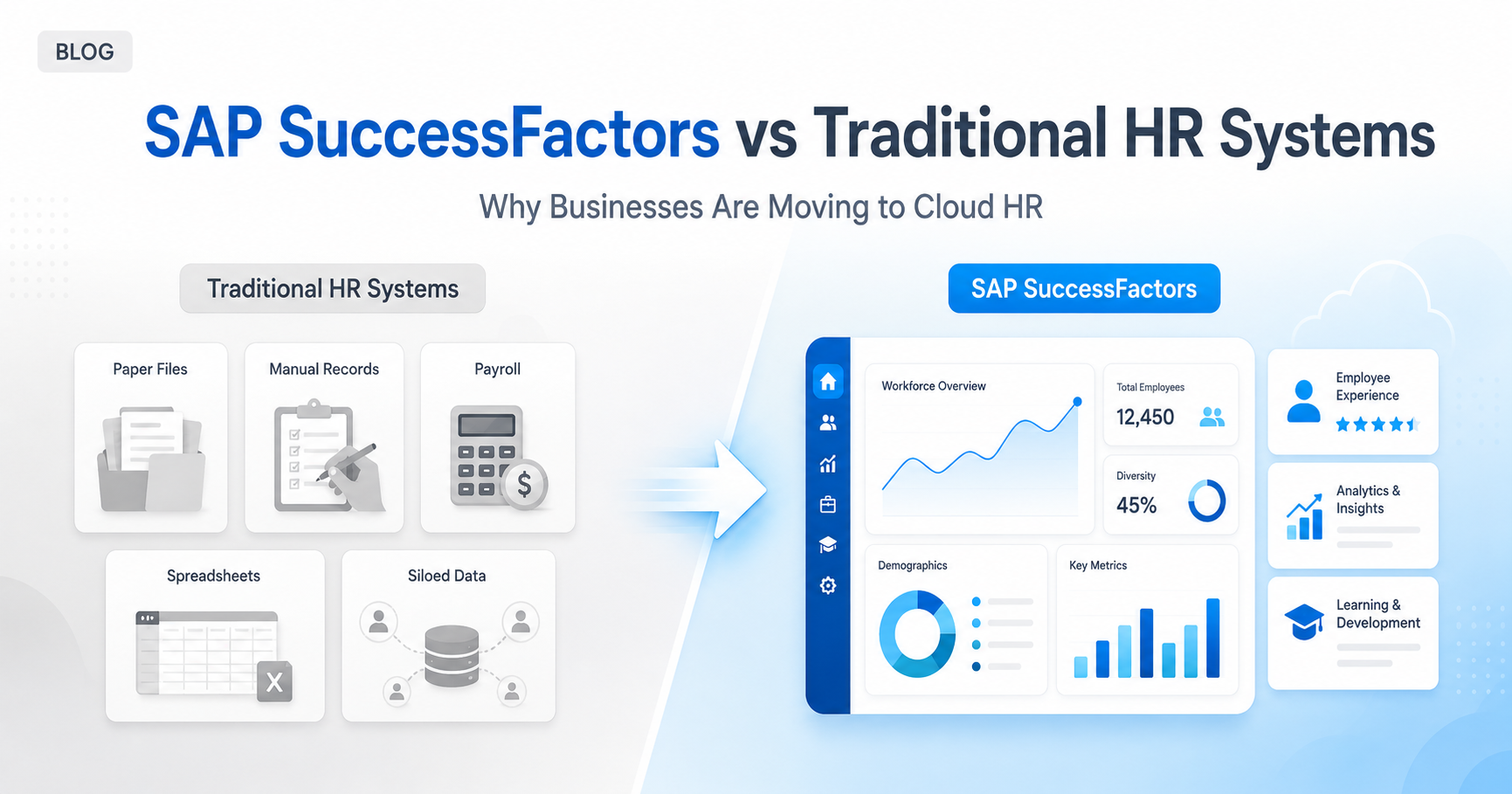
· Cloud HR is replacing traditional HR systems because businesses need better scalability,accessibility, automation, and workforce visibility.
· SAP Success Factors helps modernize HR by connecting core HR, talent management, learning, performance,analytics, and employee experience in one cloud-first platform.
· Successful SAP Success Factors implementation needs planning, including process review, data cleanup,integration mapping, user training, and change management to get full value from cloud HR.
Human resources has changed dramatically over the last decade. Earlier, HR was largely seen as an administrative function responsible for employee records, payroll coordination, attendance, compliance, hiring paperwork, and basic workforce reporting. Today, HR is expected to do much more. It must support business growth, improve employee experience, enable workforce planning, use data for better decisions, and help organizations adapt to changing work models. This shift has exposed the limitations of many traditional HR systems.
Older HR platforms were built for a time when businesses were more centralized, workforces were mostly office-based, and HR processes changed slowly. They served their purpose well for core administration, but many of them now struggle with the speed, flexibility, and visibility that modern businesses need.
This is one of the key reasons companies are moving toward cloud-based HR software. Instead of depending on heavy infrastructure, manual upgrades, disconnected data, and IT-heavy maintenance, businesses now want HR systems that are easier to scale,simpler to access, and faster to improve.
In this shift,SAP Success Factors has become one of the leading cloud HR solutions for enterprises. It brings together core HR, talent management, employee experience, learning, performance, workforce analytics, and integration capabilities in a cloud-first model. For businesses already using SAP or planning to modernize their HR operations, SAP Success Factors offers a structured path from traditional HR systems to a more connected and future-ready HR environment.
Understanding Traditional HR Systems
Before comparing SAP SuccessFactors with traditional HR systems, it is important to understand what traditional HR systems usually look like.
Traditional HR systems are often on-premise or heavily customized software environments. They may include tools for payroll, employee records, leave management, attendance tracking, compliance, recruitment, and basic reporting. In many organizations,these systems were implemented years ago and then customized over time to suit local processes.
At first, this level of customization may seem useful. It gives businesses more control over how their HR processes work. However, over time, these customizations can become difficult to manage. Every new update, integration, compliance requirement, or organizational change may require technical effort. This creates dependency on internal IT teams, external vendors, or specialized consultants.
Another common challenge is data fragmentation. In many traditional HR environments, employee data may sit across multiple systems, spreadsheets, local databases, or regional platforms. Payroll may be in one system, recruitment in another,performance data somewhere else, and learning records in a separate tool. This makes it difficult for HR leaders to get a complete view of the workforce.
As a result,traditional HR systems often become stable but slow. They can continue running important processes, but they may not support the agility, analytics, and employee experience modern organizations expect.
What Makes Cloud HR Different?
Cloud HR changes the basic operating model of HR technology. Instead of hosting the software on internal servers, cloud-based HR software is hosted and maintained by the vendor. This means the vendor manages infrastructure, system updates, security enhancements, performance improvements, and many technical responsibilitiesthat would otherwise fall on the company’s internal teams.
For HR leaders,this creates several practical advantages. Employees and managers can access the system from different locations. HR teams can standardize processes across regions. New features and updates can be delivered more regularly. Businesses can scale users, modules, and geographies without rebuilding the system from scratch.
This matters because the modern workforce is no longer limited to one office or one region.Companies may have employees working remotely, hybrid teams across cities,contractors in different countries, and managers who need instant access to workforce data. A traditional HR system may support some of these needs, but cloud HR is designed for them from the beginning.
Cloud HR solutions also make self-service easier. Employees can update personal details,apply for leave, access documents, complete on boarding tasks, view learning content, and manage HR requests without depending on manual follow-ups.Managers can approve requests, review team data, track performance, and make workforce decisions through a more accessible interface.
In simple terms,cloud HR moves HR technology from a static administrative system to a more active business platform.
SAP SuccessFactors: A Cloud-First HR Suite
SAP SuccessFactors is SAP’s cloud-based human capital management suite. It is designed to support the complete employee lifecycle, from hiring and on boardingto core HR, performance, learning, compensation, succession planning, workforce analytics, and employee experience.
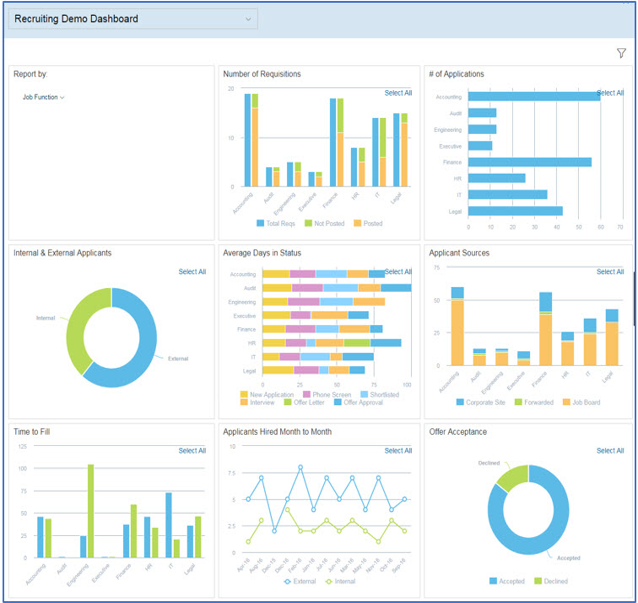
One of the biggest strengths of SAP SuccessFactors is its breadth. Many traditional SAP HR solutions were focused mainly on core HR administration and payroll-relatedprocesses. SAP SuccessFactors expands that scope by covering not only employee records, but also talent and experience-led HR functions.
For example,Employee Central acts as the core HR system where employee data, organizational structures, job information, and employment details can be managed. Other modules support recruitment, onboarding, learning, performance and goals,compensation, succession, and workforce analytics. This allows companies to move from fragmented HR processes to a more connected HR architecture.
SAP SuccessFactors is especially relevant for enterprises that already rely on SAP for finance, operations, procurement, or enterprise resource planning. HR data does not exist in isolation. Workforce information often connects with budgeting, project planning, compliance, business operations, and productivity.When HR systems are integrated with broader enterprise systems, businesses get better visibility into how people, cost, structure, and performance are connected.
This is why many companies see SAP SuccessFactors not simply as an HR tool, but as part of a larger enterprise modernization strategy.
SAP SuccessFactors vs Traditional HR Systems
The difference between SAP SuccessFactors and traditional HR systems is not only about cloud versus on-premise. It is also about how businesses manage change.
The Implementation Reality
Moving from traditional HR systems to SAP SuccessFactors is not just a software migration.It is a business transformation project. Companies need to review their current HR processes, clean their data, define ownership, map integrations, train users, and manage change across employees and managers.
One of the biggest mistakes companies make is trying to replicate every old process in the new system. If an organization simply moves outdated workflows into SAP SuccessFactors, it may not get the full value of cloud HR. The better approach his to ask what should be standardized, what should be simplified, and what should be redesigned.
For example, if different regions follow different approval flows, job structures, naming conventions, or employee data practices, the implementation phase is the right time to create alignment. Similarly, if reporting depends heavily on manual spreadsheets, the organization should define what data needs to be captured in the system and how leaders will use that data.
Change management is equally important. HR teams, managers, and employees need to understand why the system is changing, how it will help them, and what new responsibilities they have. Without proper communication and training, even a strong platform can face adoption challenges.
A successful SAP SuccessFactors implementation usually begins with a clear process audit.Businesses should identify which HR processes are creating delays, which systems must be integrated, which data needs to be cleaned, and which employee experiences need improvement. This gives the project a practical foundation instead of treating it as a purely technical deployment.
When Traditional HR Systems May Still Make Sense
Even though cloud HR is becoming the preferred direction, traditional HR systems may still have a role in some organizations.
For example,companies with highly complex payroll rules, strict internal hosting policies,or deeply customized legacy processes may not move everything to the cloud immediately. In such cases, a hybrid approach may be more realistic. Core employee experience, talent management, learning, performance, and analytics may move to cloud HR, while certain payroll or compliance-heavy processes remain connected to existing systems.
This is especially common in large enterprises where complete replacement is difficult.Instead of taking a risky big-bang approach, companies may modernize gradually.They may start with Employee Central, onboarding, recruitment, learning, or performance management, and then expand cloud adoption over time.
The key point is that traditional systems do not always disappear overnight. However, their role often changes. They become part of a transitional architecture while the organization moves toward a more cloud-based HR future.
Choosing the Right Path for Your Business
For most businesses, the question is no longer whether cloud HR has value. The bigger question is how to adopt it in a way that supports business continuity and long-term growth.
SAP SuccessFactors is a strong fit for organizations that want global HR standardization, stronger employee data visibility, modern talent management,improved employee experience, and better integration with the wider SAP ecosystem. It is especially useful for enterprises that want to move away from fragmented HR tools and build a more connected workforce platform.
However, the right path depends on business readiness. Before implementing SAP SuccessFactors, companies should evaluate their current HR processes, data quality, integration requirements, payroll dependencies, reporting gaps, and change-management capacity.
A good starting point is to identify the areas where traditional HR systems are slowing the business. Are employees waiting too long for HR support? Are managers unable to access accurate team data? Are reports being created manually? Are different regions following inconsistent processes? Are upgrades becoming expensive and time-consuming? The answers to these questions can help define the implementation roadmap.
FAQs
1. How long does it usually take to implement SAP SuccessFactors?
The timeline depends on company size, modules selected, data readiness, integrations, and customization needs. A phased roll out usually works better than trying to implement everything at once.
2. Can SAP SuccessFactors integrate with existing payroll systems?
Yes, SAP SuccessFactors can be integrated with existing payroll systems, depending on the company’s setup. Many businesses use it with SAP payroll or third-party payroll platforms.
3. Is SAP SuccessFactors suitable for mid-sized businesses?
Yes, it can suit mid-sized businesses that are growing, expanding across locations, or planning to standardize HR processes. However, the implementation scope should match business maturity and budget.
4. What should companies prepare before moving to cloud HR?
Companies should clean employee data, review current HR workflows, identify integration needs,define reporting goals, and prepare users through communication and training before migration.
5. Does cloud HR improve compliance management?
Cloud HR can improve compliance by centralizing employee records, workflows, approvals, and reporting. However, companies still need proper policies, local compliance checks, and regular audits.
Conclusion
The move from traditional HR systems to SAP SuccessFactors reflects a larger change in how businesses think about HR technology. Companies no longer want HR systems that only store employee records and support administrative tasks. They need platforms that improve workforce visibility, support better decisions, simplify employee experiences, and help HR operate as a strategic business function.
SAP SuccessFactors brings these advantages together in a cloud-first HR suite. It helps organizations connect core HR, talent management, learning, performance,analytics, and employee experience within a more modern architecture.
For companies comparing SAP SuccessFactors, cloud-based HR software, and existing SAP HR solutions, the most important takeaway is this: cloud HR is not just a technology upgrade. It is a shift toward a more agile, data-driven, and employee-centered way of managing the workforce.
With the right implementation partner, this shift becomes smoother and more strategic. Vestrics Solutions Pvt. Ltd. helps businesses plan, implement, and optimize SAP HR solutions with a focus on process clarity, system alignment, and long-term business value. For organizations ready to modernize HR, Vestrics Solutions Pvt. Ltd. can support the journey from traditional HR systems to a smarter,cloud-enabled HR environment. Book a consultation to know more.


Fuel Your Business Transformation with Our Insights
Bookmark this page for regular updates and explore how our expertise can accelerate your
transformation journey.